 National Parks Journal
Big Bend National Park
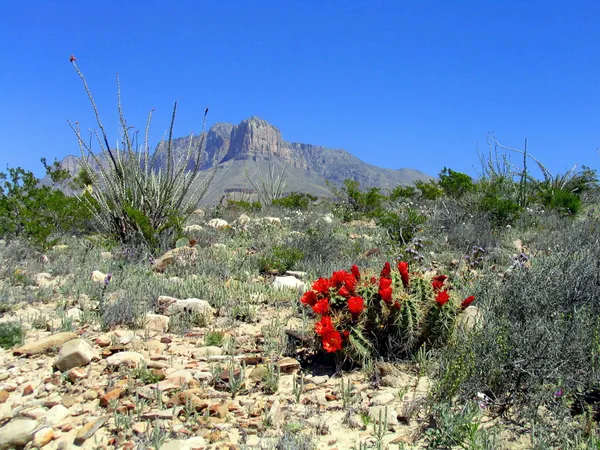
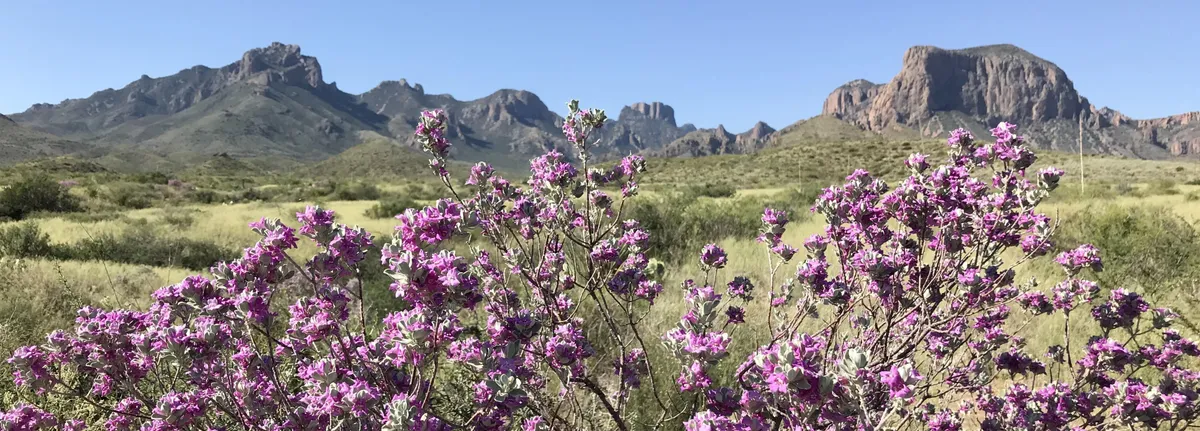
There is a place in Far West Texas where night skies are dark as coal and rivers carve temple-like canyons in ancient limestone. Here, at the end of the road, hundreds of bird species take refuge in a solitary mountain range surrounded by weather-beaten desert. Tenacious cactus bloom in sublime southwestern sun, and species diversity is the best in the country. This magical place is Big Bend...
Entrance Fees
Getting There
Roads and entrances can close temporarily. Check current conditions on nps.gov (opens in a new tab) before you go.
Entrances
- Directions to Persimmon Gap Entrance (opens in a new tab)
Persimmon Gap EntranceMain
Marathon, TX · Open year-round, 24 hours
- Directions to Maverick Entrance (opens in a new tab)
Maverick EntranceMain
Terlingua, TX · Open year-round, 24 hours
Airports
- MAF
Midland International Air & Space Port · Midland, TX
ClosestMid-size airport - ELP
El Paso International Airport · El Paso, TX
Major airport
Distances are approximate road distances; tap a distance for live driving directions.
Activities
Top Hikes
10.5 mi · 2,500 ft gain · out & back
Ascent to Big Bend's highest point with 360-degree views. The final 25 feet requires a climb up solid rock.
Starts at: Chisos Basin Trailhead
4.8 mi · 1,100 ft gain · out & back
One of the best scenic trails in the park, rising through the Chisos Mountains with spectacular views of Juniper Canyon.
Starts at: Lost Mine Trailhead
14.5 mi · 2,000 ft gain · loop
Challenging loop with stunning vistas from the rim of the Chisos Mountains. Can be done as a long day hike or overnight backpack.
Starts at: Chisos Basin Trailhead
5.5 mi · 1,000 ft gain · out & back
Descends through Oak Creek Canyon to a pour-off framing panoramic desert vistas.
Starts at: Chisos Basin Trailhead
Upcoming Events
Sunset with the Superintendent
Join the Superintendent for an informal question and answer session. Watch the sun set over the Chisos Mountains as you get answers to your questions about management issues and learn what it’s like to run a national park. Meet at the patio of the Chisos Mountains Lodge. Wheelchair accessible.
Best Time to Visit Big Bend
Best time to visit: February–March, November–December
The best time to visit Big Bend National Park is February–March and November–December. Desert and river areas are pleasant in late fall through early spring; from May the lowlands regularly exceed 100°F.
In those months, average highs are 63–75°F at Panther Junction Visitor Center. March is the busiest month on average, while February is noticeably quieter.
Monthly averages at Panther Junction Visitor Center (3,740 ft). Climate normals (1991–2020): PRISM Group, Oregon State University.
Weather & Climate
Big Bend is in the Chihuahuan Desert. Sunshine is abundant year-round. Spring (March) is typically warm and pleasant and is the park's busiest season. Summer heat begins in May. It is extremely HOT. Temperatures vary greatly between the desert which is usually well above 100 degrees F by late morning, and the Chisos Mountains, which can be 10-15 degrees cooler. May - August are the hottest months. Fall and Winter (Nov-Feb) are mild and pleasant, but some freezing does occur. Snow is rare.