 National Parks Journal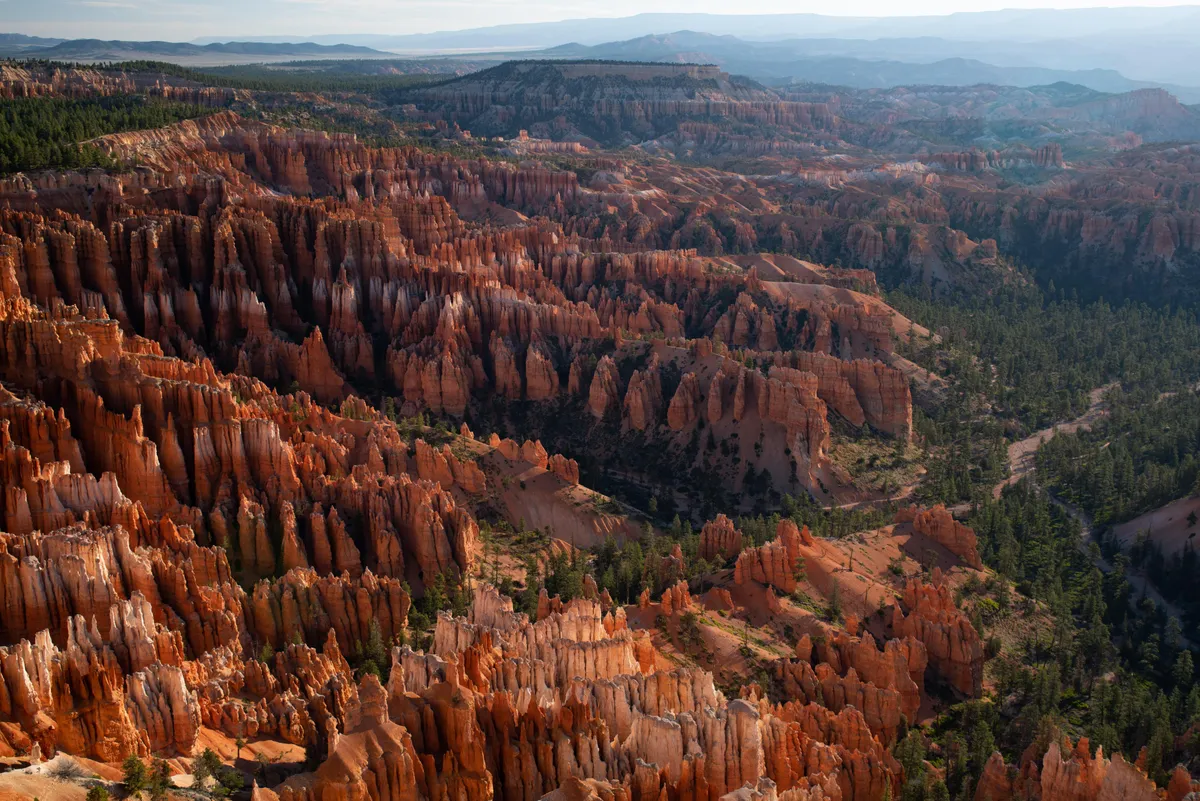
Photo: NPS Photo / Peter Densmore · Public domain
Bryce Canyon National Park
Hoodoos (irregular columns of rock) exist on every continent, but here is the largest concentration found anywhere on Earth. Situated along a high plateau at the top of the Grand Staircase, the park's high elevations include numerous life communities, fantastic dark skies, and geological wonders that defy description.
Entrance Fees
Getting There
Roads and entrances can close temporarily. Check current conditions on nps.gov (opens in a new tab) before you go.
Entrances
- Directions to Bryce Canyon Entrance Station (opens in a new tab)
Bryce Canyon Entrance StationMain
Bryce Canyon City, UT · Open year-round, 24 hours
Airports
- CDC
Cedar City Regional Airport · Cedar City, UT
ClosestSmall airportLimited regional flights (Delta Connection to Salt Lake City).
- LAS
Harry Reid International Airport · Las Vegas, NV
Major airport
Distances are approximate road distances; tap a distance for live driving directions.
Activities
Top Hikes
2.9 mi · 625 ft gain · loop
The park's most popular trail past Thor's Hammer, Wall Street switchbacks, and towering hoodoos.
Starts at: Sunrise Point or Sunset Point
1.3 mi · 515 ft gain · loop
Short but steep loop featuring iconic switchbacks through Wall Street. Wall Street side closed seasonally.
Starts at: Sunset Point
5.5 mi · 1,560 ft gain · loop
Steep, spectacular hike through the heart of the park past the Wall of Windows. Must be hiked clockwise.
Starts at: Bryce Point
8 mi · 1,900 ft gain · loop
See the Chinese Wall, Tower Bridge, and tall hoodoos on a picturesque, less crowded trail through Fairyland and Campbell Canyons.
Starts at: Fairyland Point
Upcoming Events
Geology Ranger Talk
Come join a Ranger near Sunset Point and learn about the geology of Bryce Canyon. Program typically lasts 20-30 minutes. Wheelchair accessible. This event will be cancelled in the event of thunderstorms, low wind chill, or staffing shortages.
Rim Walk with a Ranger
Come join a Ranger at Sunset Point for a rim walk toward Sunrise Point. The talk will be on a random topic of the ranger's choosing, covering natural, cultural, or historical resources. Visitors meet Ranger at alcove to the right of Sunset Point overlook. This program will be cancelled by thunderstorms, extreme cold weather, or staffing shortages. Wheelchair Accessible.
Typically offered year-round at sunset as weather permits. Those planning to join a ranger-led full moon hike at Bryce Canyon National Park can make reservations online via Recreation.gov. Tickets for each month’s hike are released in two phases, 14 and 5 days in advance.This is a "ranger's choice" hike and can range from an easy hike along the rim of the plateau to a more strenuous hike that descends down into the canyon along steep and rocky trails. More information will be given on the day of the event. Hikes are typically 1 to 2 miles.For more information on full moon hikes, including schedules and how to participate, please visit our Full Moon Hikes page. Due to the nature of this special activity all participants must agree to the following rules: Children 7 and younger are not permitted. Hiking boots or hiking shoes (lug soles) in good condition are required for your safety and the safety of Park Staff and other Participant(s). White light flashlights, headlamps are not allowed to be used during the hike (you may bring them for later use). Red light flashlights and headlamps are permitted as necessary. Flash photography may be permitted under key restrictions. Bring drinking water and a jacket - night time temperatures can be cold. Due to steep and rocky trails this activity is not wheelchair accessible. Pets are not allowed. Windchill will cancel this event.
Best Time to Visit Bryce Canyon
Best time to visit: May–June, September–October
The best time to visit Bryce Canyon National Park is May–June and September–October. Days are mild and snow is mostly gone, avoiding the July–August thunderstorm peak and the cold, snowy winter.
In those months, average highs are 58–74°F at Bryce Canyon Visitor Center. June is the busiest month on average.
Monthly averages at Bryce Canyon Visitor Center (7,900 ft). Climate normals (1991–2020): PRISM Group, Oregon State University.
Weather & Climate
Due of its high elevation climate, weather at Bryce Canyon through autumn, winter, and spring can be highly variable. From October to May temperatures fall below freezing nearly every night. The park typically experiences its coldest and snowiest periods from December through February. Spring storms in March and April can still produce heavy snowfall that may impact travel in the region. Summer highs are typically in the 70s-80s F and afternoon thunderstorms are common in July and August.