 National Parks Journal

Capitol Reef National Park
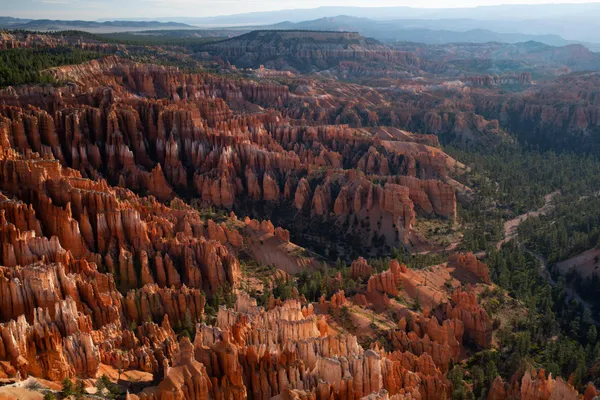
Located in south-central Utah in the heart of red rock country, Capitol Reef National Park is a hidden treasure filled with cliffs, canyons, domes, and bridges in the Waterpocket Fold, a geologic monocline (a wrinkle on the earth) extending almost 100 miles.
Entrance Fees
Getting There
Roads and entrances can close temporarily. Check current conditions on nps.gov (opens in a new tab) before you go.
Entrances
- Directions to Capitol Reef Visitor Center (opens in a new tab)
Capitol Reef Visitor CenterMain
Torrey, UT · Open year-round except some holidays; hours vary
- Directions to UT-24 from Torrey (west) (opens in a new tab)
UT-24 from Torrey (west)
Torrey, UT · Open year-round, 24 hours
- Directions to UT-24 from Hanksville (east) (opens in a new tab)
UT-24 from Hanksville (east)
Hanksville, UT · Open year-round, 24 hours
- Directions to Burr Trail (from Boulder) (opens in a new tab)
Burr Trail (from Boulder)
Boulder, UT · Usually open year-round; unpaved switchbacks inside the park can close after storms
Remote southern district; no paved road to the visitor center area
Airports
- CNY
Canyonlands Regional Airport · Moab, UT
ClosestSmall airportSmall regional airport. United Express flies to Denver year-round; Delta Connection flights to Salt Lake City are seasonal.
- SLC
Salt Lake City International Airport · Salt Lake City, UT
Major airport
Distances are approximate road distances; tap a distance for live driving directions.
Towns to stay in
Boulder, UTFor the Burr Trail
No lodging inside the park · NPS lodging info (opens in a new tab)
Activities
Top Hikes
1.8 mi · 400 ft gain · out & back
Scenic trail to a spectacular 133-foot natural bridge with canyon views and 17 interpretive points of interest.
Starts at: Highway 24 Trailhead
4.4 mi · 200 ft gain · out & back
An easy walk through a deep, dramatic canyon with towering Navajo sandstone walls rising on both sides.
Starts at: Grand Wash Trailhead
2 mi · 80 ft gain · out & back
A walk through a deep canyon featuring historic pioneer inscriptions and natural waterpockets carved into the rock.
Starts at: Capitol Gorge Trailhead
3.4 mi · 670 ft gain · out & back
Steep climb through Grand Wash canyon to a stunning natural arch perched on a cliff edge with dramatic slickrock terrain.
Starts at: Grand Wash Trailhead
Upcoming Events
Archeology Talk
Learn about cultures that call this place home. Meet at the Petroglyph Panel boardwalk. Ranger program schedules are also posted on bulletin boards at the visitor center and campground. Program topics may change. Programs may be cancelled due to weather or emergencies. Check at visitor center for updated daily program offerings.
Ranger's Choice Talk
Learn more about the natural and cultural resources of Capitol Reef. Meet at the Campground Amphitheater, next to Loop C of the Fruita Campground. Ranger program schedules are also posted on bulletin boards at the visitor center and campground. Program topics may change. Programs may be cancelled due to weather or emergencies. Check at visitor center for updated daily program offerings.
Guided Walk
Meet outside the Gifford House for an easy to moderate one-hour walk with a ranger. Bring water; wear good shoes and sun protection. Parking available across the street in the dirt lot. Programs may be cancelled due to weather or emergencies. Check at the Visitor Center for updated program listings.
Best Time to Visit Capitol Reef
Best time to visit: April–May, September–October
The best time to visit Capitol Reef National Park is April–May and September–October. Hiking temperatures are comfortable, avoiding summer heat and the July–August monsoon peak.
In those months, average highs are 64–80°F at Capitol Reef Visitor Center. May is the busiest month on average.
Monthly averages at Capitol Reef Visitor Center (5,500 ft). Climate normals (1991–2020): PRISM Group, Oregon State University.
Weather & Climate
Weather is posted daily; check at the park visitor center for weather updates. Do not enter into narrow canyons if there is a threat of rain or if rain has been falling in the area. Rain and snow may also make dirt roads impassable to vehicles.