 National Parks Journal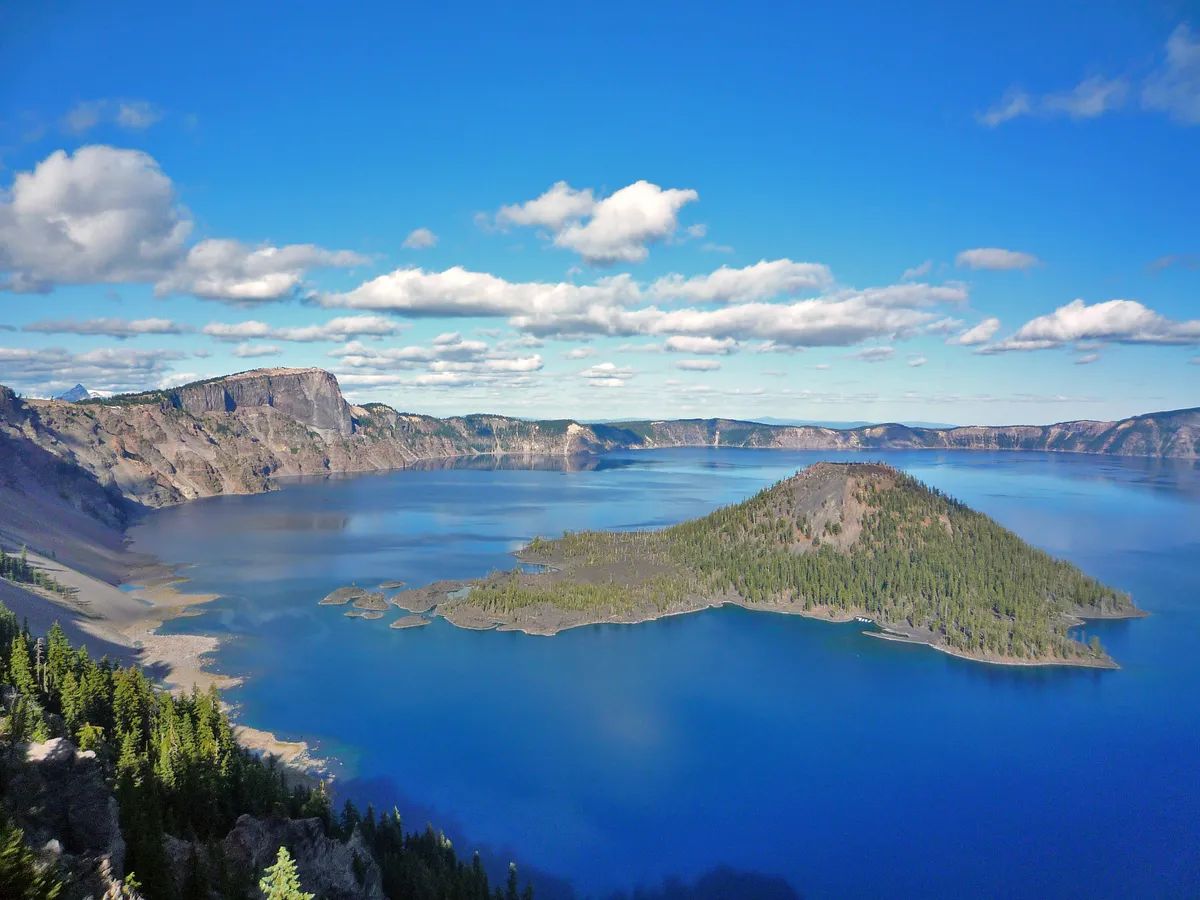
Photo: NPS Photo · Public domain
Crater Lake National Park
Crater Lake inspires awe. Native Americans witnessed its formation 7,700 years ago, when a violent eruption triggered the collapse of a tall peak. Scientists marvel at its purity—fed by rain and snow, it’s the deepest lake in the USA and one of the most pristine on Earth. Artists, photographers, and sightseers gaze in wonder at its blue water and stunning setting atop the Cascade Mountain Range.
Entrance Fees
Getting There
Roads and entrances can close temporarily. Check current conditions on nps.gov (opens in a new tab) before you go.
Entrances
- Directions to Annie Spring Entrance Station (opens in a new tab)
Annie Spring Entrance StationMain
Fort Klamath, OR · Open year-round
- Directions to North Entrance Station (opens in a new tab)
North Entrance Station
Chemult, OR · Usually open June–October; closed by snow in winter
- Directions to West Entrance (OR-62 from Medford) (opens in a new tab)
West Entrance (OR-62 from Medford)
Prospect, OR · Open year-round
- Directions to South Entrance (OR-62 from Klamath Falls) (opens in a new tab)
South Entrance (OR-62 from Klamath Falls)
Fort Klamath, OR · Open year-round
Airports
- MFR
Rogue Valley International-Medford Airport · Medford, OR
ClosestMid-size airport - PDX
Portland International Airport · Portland, OR
Major airport
Distances are approximate road distances; tap a distance for live driving directions.
Towns to stay in
Inside the park: Crater Lake Lodge, Cabins at Mazama Village · NPS lodging info (opens in a new tab)
Activities
Top Hikes
2.2 mi · 700 ft gain · out & back
The only trail providing access to the shore of Crater Lake where visitors can swim or board boat tours to Wizard Island.
Starts at: North Rim Drive
3.6 mi · 1,010 ft gain · out & back
Switchbacks to a high peak along the caldera rim with stunning lake and valley views and wildflower meadows.
Starts at: Rim Village
1.6 mi · 420 ft gain · out & back
Climbs to a historic fire lookout with 360-degree views of Crater Lake and Wizard Island. Popular at sunset.
Starts at: Watchman Overlook
4.4 mi · 1,250 ft gain · out & back
Ascends to the park's highest peak at 8,929 feet, the oldest point in the caldera. Most expansive views in the park.
Starts at: East Rim Drive
Upcoming Events
No upcoming events scheduled for Crater Lake National Park. Events are updated daily — check back soon or visit nps.gov for the latest.
Best Time to Visit Crater Lake
Best time to visit: July–September
The best time to visit Crater Lake National Park is July–September. All of Rim Drive is usually open by mid-July, and July–September are the warm, dry months; May, June, and October are a snow gamble.
In those months, average highs are 64–70°F at Rim Village. July is the busiest month on average, while September is noticeably quieter.
Monthly averages at Rim Village (7,130 ft). Climate normals (1991–2020): PRISM Group, Oregon State University.
Weather & Climate
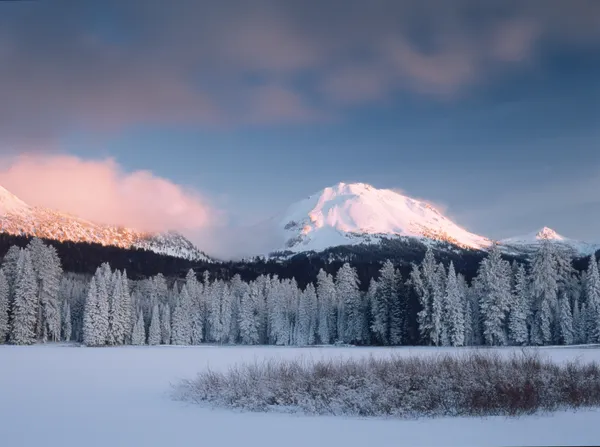
July, August, and September are your best bets for warm, dry weather. In May, June, and October, sunny days alternate with periods of rain and snow. Winters at Crater Lake are long and snowy. Storms from the Pacific Ocean dump an annual average of 41 feet (13.5 meters) of snow at park headquarters. When it's raining or snowing, the lake is usually hidden by clouds. Crater Lake is completely invisible about 50% of the time in the winter!