 National Parks Journal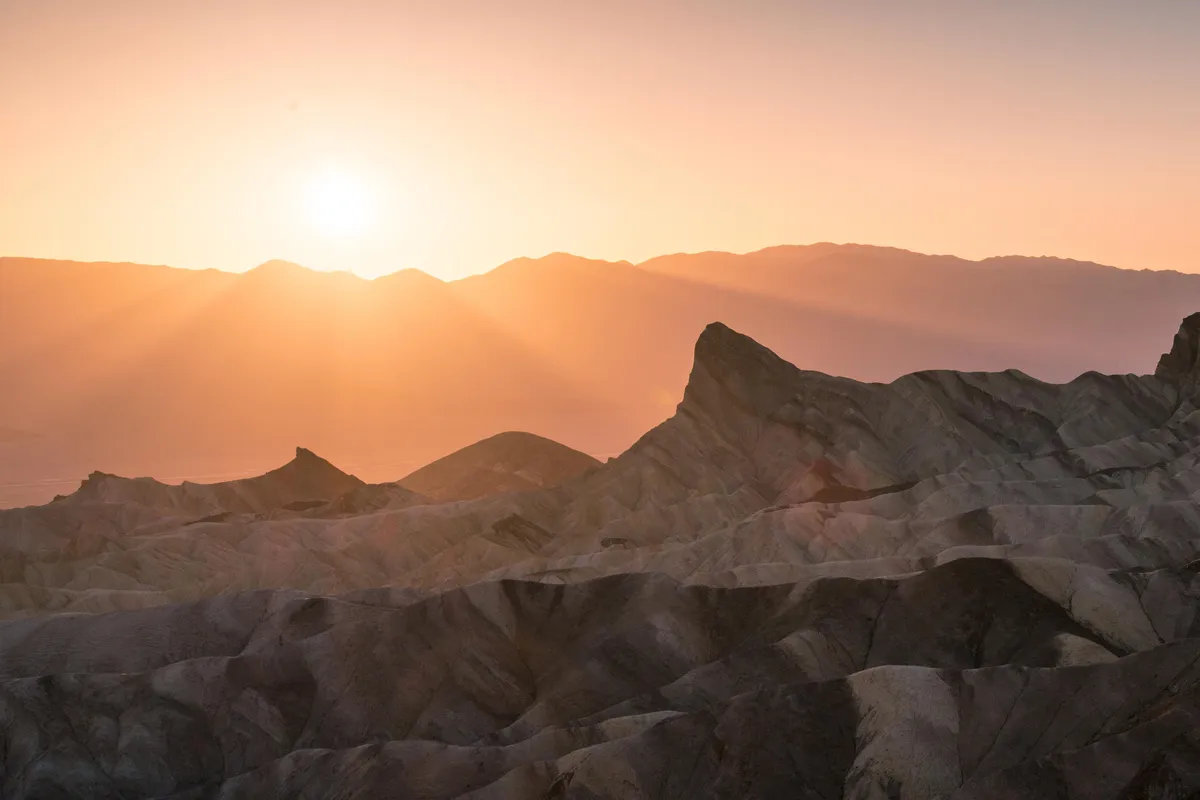
Death Valley National Park
In this below-sea-level basin, steady drought and record summer heat make Death Valley a land of extremes. Yet, each extreme has a striking contrast. Towering peaks are frosted with winter snow. Rare rainstorms bring vast fields of wildflowers. Lush oases harbor tiny fish and refuge for wildlife and humans. Despite its morbid name, a great diversity of life thrives in Death Valley.
Entrance Fees
Getting There
Roads and entrances can close temporarily. Check current conditions on nps.gov (opens in a new tab) before you go.
Entrances
- Directions to Furnace Creek Visitor Center (opens in a new tab)
Furnace Creek Visitor CenterMain
Furnace Creek, CA · Open year-round
- Directions to East Entrance (CA-190 from Death Valley Junction) (opens in a new tab)
East Entrance (CA-190 from Death Valley Junction)Main
Death Valley Junction, CA · Open year-round
- Directions to West Entrance (CA-190 from Olancha / Lone Pine) (opens in a new tab)
West Entrance (CA-190 from Olancha / Lone Pine)Main
Lone Pine, CA · Open year-round
- Directions to Daylight Pass Entrance (NV-374 from Beatty) (opens in a new tab)
Daylight Pass Entrance (NV-374 from Beatty)
Beatty, NV · Open year-round
- Directions to Southeast Entrance (CA-178 from Shoshone) (opens in a new tab)
Southeast Entrance (CA-178 from Shoshone)
Shoshone, CA · Open year-round
- Directions to Panamint Valley Entrance (CA-178 from Trona) (opens in a new tab)
Panamint Valley Entrance (CA-178 from Trona)
Trona, CA · Open year-round
Airports
- LAS
Harry Reid International Airport · Las Vegas, NV
ClosestMajor airport
Distances are approximate road distances; tap a distance for live driving directions.
Towns to stay in
Inside the park: Stovepipe Wells Village, The Inn at Death Valley, The Ranch at Death Valley, and others · NPS lodging info (opens in a new tab)
Activities
Top Hikes
2 mi · 185 ft gain · out & back
The most famous dunes in Death Valley with no formal trail. Navigate cross-country to the high dune summit.
Starts at: Sand Dunes Parking Area
3 mi · 535 ft gain · out & back
Colorful badlands of golden and red sedimentary rock with views toward Manly Beacon formation.
Starts at: Golden Canyon Parking Area
1 mi · 86 ft gain · out & back
Short rocky canyon hike to a natural bridge formation carved by flash floods with a dry waterfall beyond.
Starts at: Natural Bridge Parking Area
4 mi · 1,200 ft gain · out & back
Polished marble canyon narrows with mosaic-like breccia walls.
Starts at: Mosaic Canyon Road
Upcoming Events
The Death Valley '49ers Encampment is a multi-day event that focuses on Death Valley and Western history, lore, music, and art. The Encampment includes a vendor/exhibition fair, guest speakers about history and geology, Western music performances, cowboy poetry, star gazing, etc.
Star Party
Join Death Valley Rangers and the Las Vegas Astronomical Society for a Star Party! Drop by anytime 7pm-10pm to explore the night sky by telescope. To help you eyes adjust to the night sky, please limit white light use at event. Parking is located at the Furnace Creek Visitor Center with a short walk to Fiddlers' Campgound.
Solar Scope Viewing
Join the Las Vegas Astronomical Society to look through solar scopes and learn more about our sun.
Best Time to Visit Death Valley
Best time to visit: February–March, November–December
The best time to visit Death Valley National Park is February–March and November–December. Valley temperatures are comfortable in late fall to early spring; summer often tops 120°F.
In those months, average highs are 66–81°F at Furnace Creek Visitor Center. March is the busiest month on average.
Monthly averages at Furnace Creek Visitor Center (190 ft below sea level). Climate normals (1991–2020): PRISM Group, Oregon State University.
Weather & Climate
SPRING is the most popular time to visit Death Valley. Warm and sunny days with the possibility of spring wildflowers is a big attraction. SUMMER starts early in Death Valley. By May the valley can be scorching hot. AUTUMN arrives in late October, with warm but pleasant temperatures and generally clear skies. WINTER has cool days, chilly nights and rarely, rainstorms. With snow capping the high peaks and low angled winter light, this season is especially beautiful for exploring the valley.