 National Parks Journal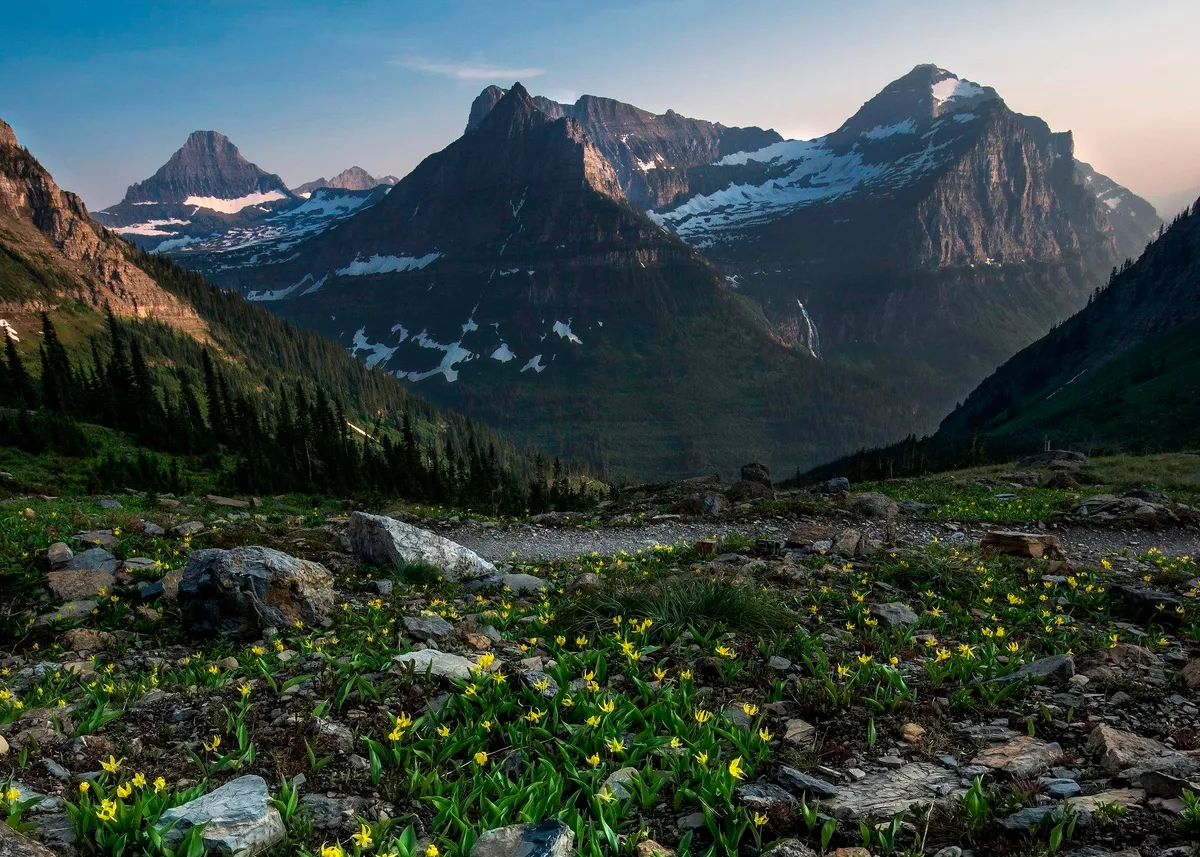
Photo: Andrew Parlette · CC BY 2.0
Glacier National Park
A showcase of melting glaciers, alpine meadows, carved valleys, and spectacular lakes. With over 700 miles of trails, Glacier is a paradise for adventurous visitors seeking a landscape steeped in human culture. Relive the days of old through historic chalets, lodges, and the famous Going-to-the-Sun Road.
Entrance Fees
Getting There
Roads and entrances can close temporarily. Check current conditions on nps.gov (opens in a new tab) before you go.
Entrances
- Directions to West Entrance (opens in a new tab)
West EntranceMain
West Glacier, MT · Open year-round (Going-to-the-Sun Road beyond Lake McDonald usually closed mid-Oct to late June)
- Directions to St. Mary Entrance (opens in a new tab)
St. Mary EntranceMain
St. Mary, MT · Open year-round; road beyond the entrance area closed in winter
- Directions to Many Glacier Entrance (opens in a new tab)
Many Glacier Entrance
Babb, MT · Usually open late May–October; closed by snow in winter
- Directions to Two Medicine Entrance (opens in a new tab)
Two Medicine Entrance
East Glacier Park, MT · Usually open late May–October; closed by snow in winter
- Directions to Polebridge Entrance (opens in a new tab)
Polebridge Entrance
Polebridge, MT · Usually open year-round; road conditions vary
Remote North Fork area; long unpaved roads
- Directions to Cut Bank Entrance (opens in a new tab)
Cut Bank Entrance
Browning, MT · Usually open late May–September only
Remote dead-end dirt road to a primitive campground
Airports
- FCA
Glacier Park International Airport · Kalispell, MT
ClosestMid-size airport - GEG
Spokane International Airport · Spokane, WA
Major airport
Distances are approximate road distances; tap a distance for live driving directions.
Towns to stay in
Inside the park: Village Inn Motel, Lake McDonald Lodge, Rising Sun Motor Inn, and others · NPS lodging info (opens in a new tab)
Activities
Top Hikes
15.2 mi · 800 ft gain · out & back
One of the most iconic hikes in Glacier, traversing the Continental Divide with stunning alpine meadows, wildflowers, and mountain goat sightings. The trail hugs the Garden Wall with dramatic exposure and panoramic views.
Starts at: Logan Pass Visitor Center
2.8 mi · 460 ft gain · out & back
One of the park's most popular trails from Logan Pass, ascending through alpine meadows with mountain goats and wildflowers to a spectacular overlook of Hidden Lake and Bearhat Mountain.
Starts at: Logan Pass Visitor Center
10.6 mi · 1,600 ft gain · out & back
A premier hike to one of the park's most accessible glaciers, passing turquoise Grinnell Lake with views of towering peaks and waterfalls. A boat shuttle across Swiftcurrent and Josephine Lakes can shorten the hike to 7.2 miles round trip.
Starts at: Grinnell Trailhead, Many Glacier
9.6 mi · 1,200 ft gain · out & back
Hike through wildflower meadows to a stunning alpine cirque lake where icebergs float well into summer. The sheer 3,000-foot walls surrounding the lake create a dramatic amphitheater setting.
Starts at: Iceberg Ptarmigan Trailhead, Many Glacier
Upcoming Events
No upcoming events scheduled for Glacier National Park. Events are updated daily — check back soon or visit nps.gov for the latest.
Best Time to Visit Glacier
Best time to visit: July–September
The best time to visit Glacier National Park is July–September. Going-to-the-Sun Road is usually fully open by early July and high trails are snow-free; September brings fewer crowds.
In those months, average highs are 69–81°F at Apgar Village. July is the busiest month on average.
Monthly averages at Apgar Village (3,180 ft). Climate normals (1991–2020): PRISM Group, Oregon State University.
Weather & Climate
Glacier's weather is highly variable and can be extreme. Expect warm, sunny summer days but be ready for any type of conditions. In the winter, temperatures can fall well below freezing and typically the park receives considerable amounts of snow. Glacier's geography, straddling the Continental Divide, sets the stage for clashes of two very different climates. Warm, wet Pacific air moves in from the west, and cold, dry Arctic air flows from the northeast. They meet at the Divide.