 National Parks Journal
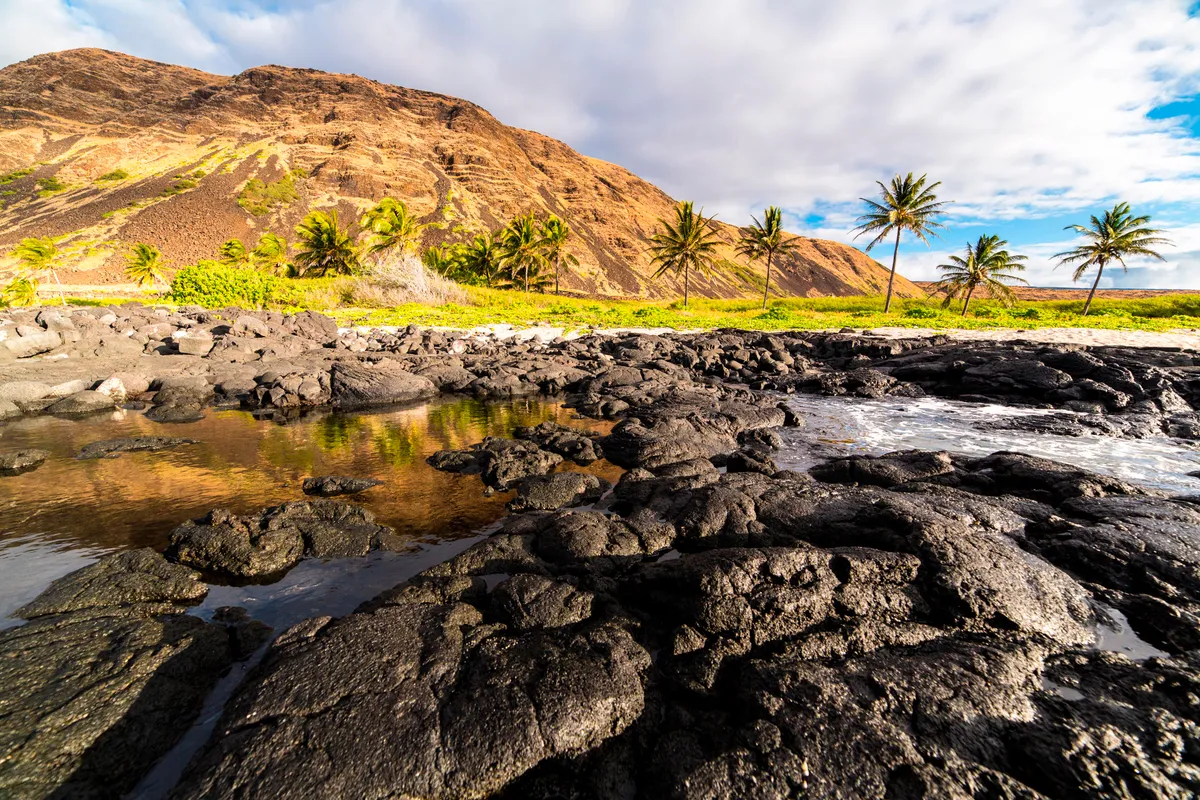
Photo: NPS Photo · Public domain
Hawaiʻi Volcanoes National Park
Hawai‘i Volcanoes National Park protects some of the most unique geological, biological, and cherished cultural landscapes in the world. Extending from sea level to 13,680 feet, the park encompasses the summits of two of the world's most active volcanoes - Kīlauea and Mauna Loa - and is a designated International Biosphere Reserve and UNESCO World Heritage Site.
Entrance Fees
Getting There
Roads and entrances can close temporarily. Check current conditions on nps.gov (opens in a new tab) before you go.
Entrances
- Directions to Hawaiʻi Volcanoes Entrance Station (opens in a new tab)
Hawaiʻi Volcanoes Entrance StationMain
Volcano, HI · Open 24 hours year-round
- Directions to Kahuku Unit (opens in a new tab)
Kahuku Unit
Ocean View, HI · Open Thursday–Sunday, 8 am–4 pm
Separate Kahuku Unit about an hour's drive southwest of the main park
Airports
- ITO
Hilo International Airport · Hilo, HI
ClosestMid-size airport - KOA
Ellison Onizuka Kona International Airport at Keāhole · Kailua-Kona, HI
Major airport
Distances are approximate road distances; tap a distance for live driving directions.
Activities
Top Hikes
1 mi · 50 ft gain · out & back
Paved, wheelchair-accessible path through landscape buried by the 1959 Kilauea Iki eruption, now slowly recovering.
Starts at: Devastation Trailhead
1.2 mi · 50 ft gain · out & back
Walk past volcanic steam vents with colorful sulfur deposits demonstrating geothermal forces below the surface.
Starts at: Kilauea Visitor Center
1.4 mi · 50 ft gain · out & back
Cross a 500-year-old lava field to approximately 23,000 ancient Hawaiian carvings viewable from a boardwalk.
Starts at: Pu'uloa Parking Area
1.2 mi · 100 ft gain · loop
Loop through a kipuka — an island of older forest surrounded by newer lava flows — with rare native plants and birds.
Starts at: Kipukapuaulu Parking Area
Upcoming Events
Explore the Summit
Join a park ranger for engaging programs that explore the geology, Native Hawaiian history, and unique native plants and animals. Programs are offered daily at 10:30 a.m. and 12:30 p.m. Programs last approximately 30-45 minutes. Program starts at the U.S. Flagpole located at the Kilauea Military Camp. Please note: Programs may be canceled due to hazardous weather or volcanic conditions. Stop by the Welcome Center for the latest updates, locations, and details.
Life on the Edge
Discover how people have understood and recorded volcanism for generations—through Native Hawaiian moʻolelo (stories), chants, and historical accounts.. This engaging ranger program blends geology with Native Hawaiian knowledge, offering a powerful look at how eruptions have shaped both the landscape and Hawaiian history. Programs are offered daily at 10 a.m., 11 a.m., 1 p.m., and 2 p.m. Ranger talk is approximately 20 minutes. Meet the ranger at Uēkahuna parking area. Please note: programs may be canceled due to hazardous weather or volcanic conditions. Stop by the Welcome Center for the latest updates, locations, and details.
Koʻi: Hawaiian Adze Demonstration and Talk Story
Join us in Kahuku to learn from Volcano woodworker and artist Tom Pico about different types of koʻi and the methods of making and assembling these very important Hawaiian tools. The koʻi is a basalt woodworking tool traditionally used by Kānaka Maoli, and kākoʻi (adze-making) was one of the essential Hawaiian cultural practices. Large koʻi were used for cutting trees and shaping canoes while smaller ones were used to carve things such as bowls, weapons, kiʻi and small tools.
Best Time to Visit Hawaiʻi Volcanoes
Best time to visit: April–May, September–October
The best time to visit Hawaiʻi Volcanoes National Park is April–May and September–October. The weather is pleasant and visitors are fewer than in the winter and summer peaks; the volcanic sights are visible year-round.
In those months, average highs are 68–73°F at Kīlauea Visitor Center. Visitor numbers peak in December, so these months are usually less crowded.
Monthly averages at Kīlauea Visitor Center (3,980 ft). Climate normals (1991–2020): NOAA NCEI.
Weather & Climate
The weather the summit of Kīlauea (~4000' elevation) varies daily and may be rainy and chilly any time of the year. Temperature varies by elevation. At the summit of the volcano, temperatures may be 12 to 15 degrees cooler than at sea level. The coastal plain at the end of Chain of Craters Road is often hot, dry, and windy with the possibility of passing showers.