 National Parks Journal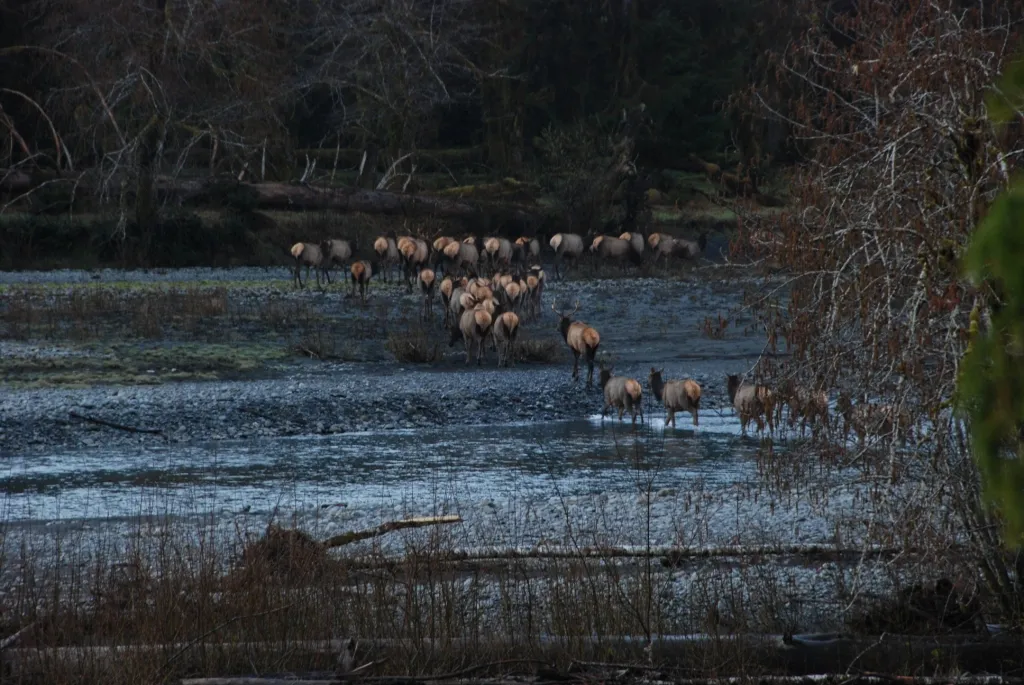
Olympic National Park
With its incredible range of precipitation and elevation, diversity is the hallmark of Olympic National Park. Encompassing nearly a million acres, the park protects a vast wilderness, thousands of years of human history, and several distinctly different ecosystems, including glacier-capped mountains, old-growth temperate rain forests, and over 70 miles of wild coastline. Come explore!
Entrance Fees
Getting There
Roads and entrances can close temporarily. Check current conditions on nps.gov (opens in a new tab) before you go.
Entrances
- Directions to Olympic National Park Visitor Center (Port Angeles) (opens in a new tab)
Olympic National Park Visitor Center (Port Angeles)Main
Port Angeles, WA · Open year-round; hours vary
- Directions to Heart O' the Hills Entrance (Hurricane Ridge) (opens in a new tab)
Heart O' the Hills Entrance (Hurricane Ridge)Main
Port Angeles, WA · Open year-round to the entrance; road to Hurricane Ridge has limited winter days
- Directions to Hoh Rain Forest Entrance (opens in a new tab)
Hoh Rain Forest Entrance
Forks, WA · Open year-round
- Directions to Sol Duc Entrance (opens in a new tab)
Sol Duc Entrance
Port Angeles, WA · Road usually open spring–fall; may close in winter
- Directions to Quinault Rain Forest (opens in a new tab)
Quinault Rain Forest
Amanda Park, WA · Open year-round
- Directions to Kalaloch (Pacific coast) (opens in a new tab)
Kalaloch (Pacific coast)
Forks, WA · Open year-round
- Directions to Mora (Rialto Beach) (opens in a new tab)
Mora (Rialto Beach)
Forks, WA · Open year-round
- Directions to Staircase Entrance (opens in a new tab)
Staircase Entrance
Hoodsport, WA · Road usually open year-round; developed area seasonal
Remote southeast corner; dead-end road
- Directions to Ozette (opens in a new tab)
Ozette
Sekiu, WA · Open year-round
Remote northwest coast; dead-end road
Airports
- SEA
Seattle-Tacoma International Airport · SeaTac, WA
ClosestMajor airportGoogle Maps may suggest a shorter route using the Seattle-Bainbridge Island ferry (about 95 mi plus the crossing).
Distances are approximate road distances; tap a distance for live driving directions.
Towns to stay in
Hoodsport, WAFor Staircase
Inside the park: Kalaloch Lodge, Lake Crescent Lodge, Log Cabin Resort, and others · NPS lodging info (opens in a new tab)
Activities
Top Hikes
3.2 mi · 700 ft gain · out & back
Paved trail to a 360-degree summit view of the Olympic Mountains, Strait of Juan de Fuca, and Vancouver Island.
Starts at: End of Hurricane Hill Road
0.8 mi · 100 ft gain · loop
Iconic old-growth rainforest loop through bigleaf maples draped with club moss in the Hoh Rain Forest.
Starts at: Hoh Rain Forest Visitor Center
1.6 mi · 50 ft gain · out & back
Level walk through old-growth forest to perhaps the most picturesque waterfall in Olympic.
Starts at: Sol Duc Road end
4.2 mi · 2,100 ft gain · out & back
Extremely steep switchbacks with stunning views of Lake Crescent and surrounding peaks.
Starts at: Storm King Ranger Station
Upcoming Events
No upcoming events scheduled for Olympic National Park. Events are updated daily — check back soon or visit nps.gov for the latest.
Best Time to Visit Olympic
Best time to visit: July–September
The best time to visit Olympic National Park is July–September. These are the driest months: Hurricane Ridge and high-country trails are open and snow-free, with the best odds of dry coastal weather.
In those months, average highs are 70–74°F at Lake Crescent. August is the busiest month on average.
Monthly averages at Lake Crescent (590 ft). Climate normals (1991–2020): PRISM Group, Oregon State University.
Weather & Climate
Summers tend to be fair and warm, with high temperatures between 65 and 75 degrees F. July, August and September are the driest months, with heavier precipitation during the rest of the year. While winters are mild at lower elevation, snowfall can be heavy in the mountains. It is common for different weather conditions to exist within the park at the same time. At any time of year, visitors should come prepared for a variety of conditions.