 National Parks Journal
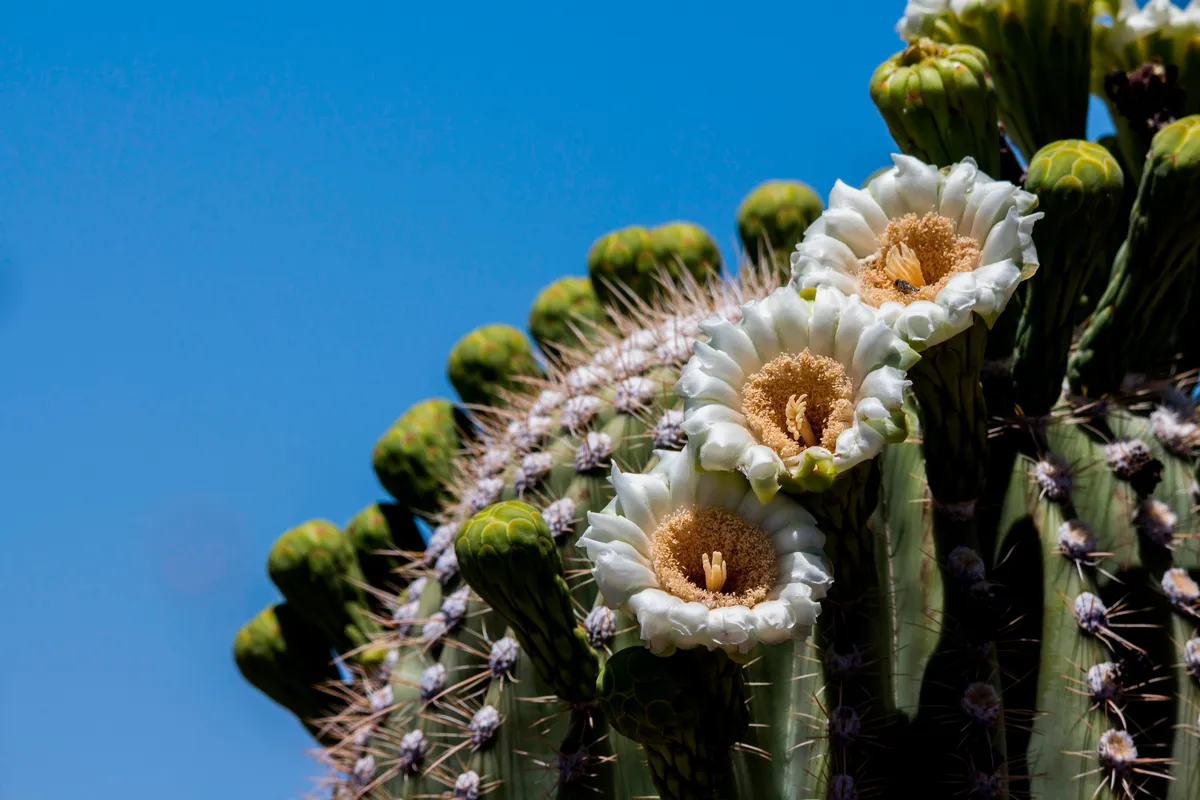
Photo: Saguaro Pictures · CC BY 3.0
Saguaro National Park
Tucson, Arizona is home to the nation's largest cacti. The giant saguaro is the universal symbol of the American west. These majestic plants, found only in a small portion of the United States, are protected by Saguaro National Park, to the east and west of the modern city of Tucson. Here you have a chance to see these enormous cacti, silhouetted by the beauty of a magnificent desert sunset.
Entrance Fees
Getting There
Roads and entrances can close temporarily. Check current conditions on nps.gov (opens in a new tab) before you go.
Entrances
- Directions to Rincon Mountain District Entrance (East) (opens in a new tab)
Rincon Mountain District Entrance (East)Main
Tucson, AZ · Cactus Forest Loop Drive open daily (hours vary by season); walk-in 24 hours
- Directions to Red Hills Visitor Center (West) (opens in a new tab)
Red Hills Visitor Center (West)Main
Tucson, AZ · Open daily; visitor center hours vary by season
Separate district on Tucson's west side; no road connects the two districts
Airports
- TUS
Tucson International Airport · Tucson, AZ
ClosestMajor airport
Distances are approximate road distances; tap a distance for live driving directions.
Activities
Top Hikes
8.7 mi · 4,000 ft gain · out & back
Ridge walk with panoramic desert scenery, a rare crested saguaro, and views from the Dome. The park's most challenging day hike.
Starts at: Javelina Picnic Area
2.4 mi · 380 ft gain · loop
Rocky stair-step sections lead through a historic mining route with excellent Sonoran Desert scenery.
Starts at: King Canyon Wash Trailhead
3.8 mi · 60 ft gain · loop
Pass through mature mesquite trees, a seasonal wash, the Loma Verde Mine, and an overlook of the cactus forest.
Starts at: Loma Verde Trailhead
1 mi · out & back
An easy trail to an old homestead foundation through a grove of large saguaros and a cool desert wash.
Starts at: Freeman Homestead Trailhead
Upcoming Events
Garden Walk (East District)
Join us for a casual walk and talk through our ethnobotanical garden to learn some sharp facts about the Sonoran Desert! From the mighty saguaro cactus to the smallest flower, come let your curiosity blossom. This is an accessible program.
Garden Walk (West District)
Join us for a guided walk through the Cactus Garden where you’ll explore the fascinating natural history of the Sonoran Desert! Wheelchair accessible.
Living with Giants (West District)
The saguaro celebrates events and faces challenges throughout its life. A biologist explains how it provides shelter and substance for wildlife; when it flowers; its growth patterns; and how it fights for survival against drought, lightning, frost, and other dangers. Wheelchair accessible.
Best Time to Visit Saguaro
Best time to visit: February–April, November
The best time to visit Saguaro National Park is February–April and November. Desert temperatures are comfortable for hiking, and spring brings wildflowers; summer regularly tops 100°F.
In those months, average highs are 69–83°F at Red Hills Visitor Center (West). March is the busiest month on average, while November is noticeably quieter.
Monthly averages at Red Hills Visitor Center (West) (2,560 ft). Climate normals (1991–2020): PRISM Group, Oregon State University.
Weather & Climate
You can expect the Winter Season to have daytime temperatures from the low 50's to the high 70's. Whereas the Summer Season can result temperatures ranging from the mid-90's to low 110's. During the Summer season, it is highly recommended to restrict outdoor activities to before 10am, or after 4pm. Late Summer into early Fall is usually accompanied by heavy monsoon rains, resulting in cooler but more humid afternoons and evenings. Flash flooding is a concern around this time of year.