 National Parks Journal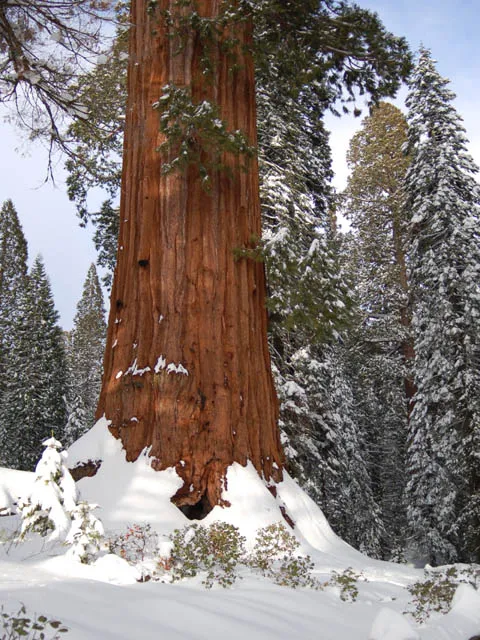
Photo: Roman Tokman · CC BY-SA 4.0
Sequoia National Park
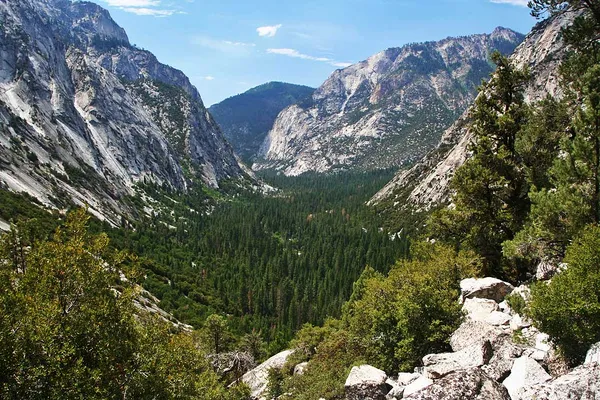
Home to the world's largest trees, Sequoia National Park features the iconic General Sherman Tree, towering granite cliffs, and deep caves. From the giant forest to the rugged peaks of the Great Western Divide, the park offers a stunning range of landscapes and wildlife.
Entrance Fees
Getting There
Roads and entrances can close temporarily. Check current conditions on nps.gov (opens in a new tab) before you go.
Entrances
- Directions to Ash Mountain Entrance (opens in a new tab)
Ash Mountain EntranceMain
Three Rivers, CA · Open year-round, 24 hours
- Directions to Generals Highway from Kings Canyon (opens in a new tab)
Generals Highway from Kings Canyon
Grant Grove, CA · Open year-round; may close briefly for snow
- Directions to Lookout Point Entrance (Mineral King) (opens in a new tab)
Lookout Point Entrance (Mineral King)
Three Rivers, CA · Usually open late May–October; closed to cars in winter
Separate dead-end road to Mineral King; no connection to the Generals Highway
Airports
- FAT
Fresno Yosemite International Airport · Fresno, CA
ClosestMajor airport
Distances are approximate road distances; tap a distance for live driving directions.
Activities
Top Hikes
2 mi · loop
A paved loop near the General Sherman Tree offering excellent opportunities to see hundreds of giant sequoias including notable named trees.
Starts at: General Sherman Tree Area
0.5 mi · 300 ft gain · out & back
A 300-foot vertical climb via stairway to the granite dome summit offering spectacular views of the Great Western Divide.
Starts at: Moro Rock Parking Area
3.4 mi · out & back
An easy walk along the Marble Fork of the Kaweah River to a stunning 1,200-foot waterfall, most impressive in early summer.
Starts at: Lodgepole Campground
8 mi · 600 ft gain · out & back
Follow the glaciated South Fork Canyon through forest and chaparral to one of the largest waterfalls in Sequoia and Kings Canyon.
Starts at: Roads End (Cedar Grove)
Upcoming Events
Ranger's Choice Talk (Grant Grove Area)
Join a ranger to unearth something you might not have known about the park. Topics change daily!
Forest Feature (Giant Forest Area)
Program DescriptionA brief yet enriching program that highlights a remarkable natural process or cultural story from the Giant Forest. This short talk offers a focused glimpse into what makes the grove extraordinary. Program DetailsLength: 20 to 30 minute talkLocation: Outside the Giant Forest MuseumSeating: Limited seating may be available Getting ThereDrive: The Giant Forest Museum is along Generals Highway. Parking is available directly across the road from the museum. However, this lot fills early—often by 10 am. To park at the museum, arriving before mid‑morning is recommended. If lot is full, proceed to next shuttle bus parking area.Shuttle: The free Sequoia Shuttle operates in Giant Forest and Lodgepole during the summer season. Take Route 1 to reach the Giant Forest Museum. All shuttle buses and routes are wheelchair accessible. Check your park newspaper or bulletin boards for route information.Walk: Many trails lead to the Giant Forest Museum. Check your park newspaper for a trail map of the Giant Forest. AccessibilityThis program is ADA accessible. There may be limited seating for this event. From the Giant Forest Museum Accessible Parking Area, a paved path leads to the front of the museum. The trail is about 150 feet (46 m) long.
Grant Grove Revealed (Grant Grove Area)
Stop by to learn more about sequoias and the history of the grove. Stay for 5 minutes or 30 minutes. A ranger is available from 10:30 am to 12 noon.
Best Time to Visit Sequoia
Best time to visit: June–September
The best time to visit Sequoia National Park is June–September. Giant Forest roads, Moro Rock, Crystal Cave, and Mineral King are all open, and high trails are snow-free.
In those months, average highs are 70–78°F at Giant Forest. July is the busiest month on average, while September is noticeably quieter.
Monthly averages at Giant Forest (6,420 ft). Climate normals (1991–2020): PRISM Group, Oregon State University.
Weather & Climate
Because of the extreme elevation range in the parks, weather conditions vary widely between areas. In summer, the sequoia groves have comfortable temperatures and the foothills are hot and dry. Snow lingers on high-mountain passes well into summer. In fall, conditions can range from summer-like to winter-like. Winter brings snow to sequoia groves and rain to the foothills. Be prepared for tire chain requirements. Spring is a great time to hike in the foothills and snow begins to melt at higher elevations.