 National Parks Journal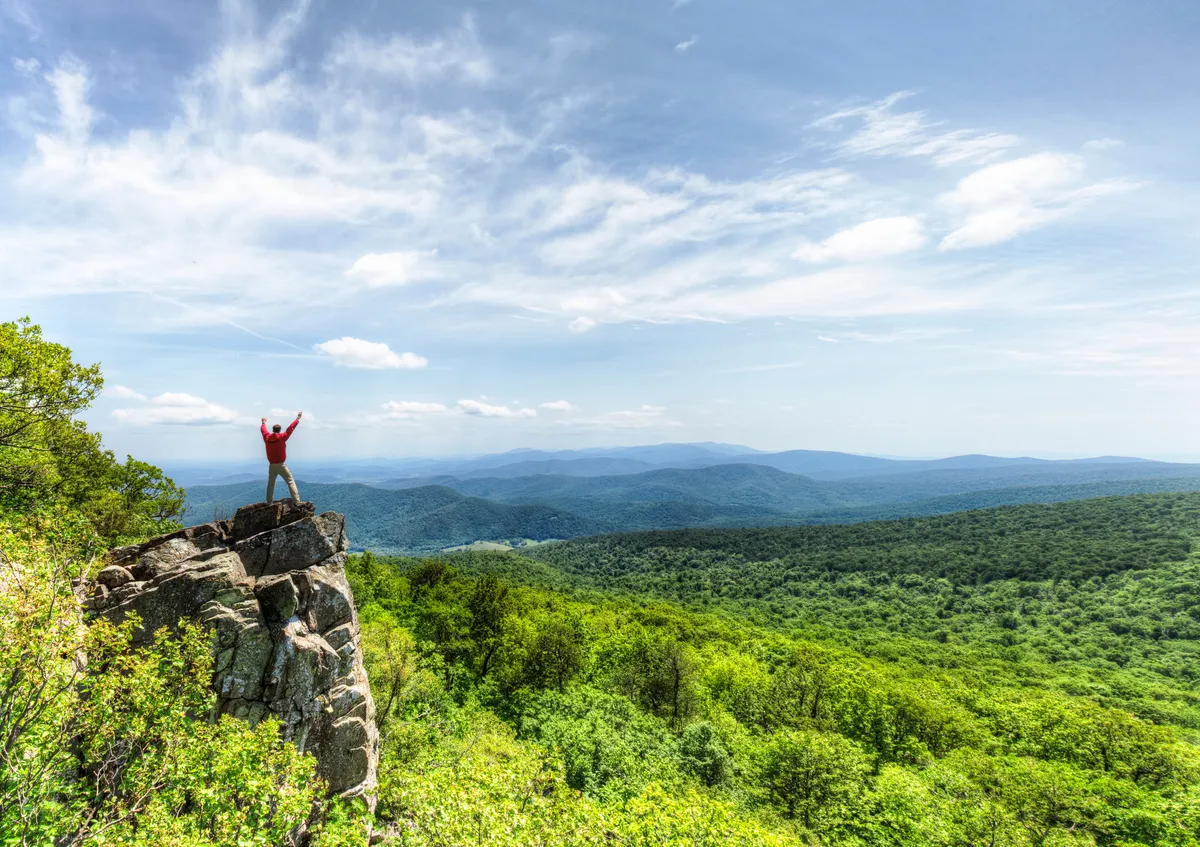
Photo: Atcovi · CC BY-SA 4.0
Shenandoah National Park
Just 75 miles from the bustle of Washington, D.C., Shenandoah National Park is a land bursting with cascading waterfalls, spectacular vistas, fields of wildflowers, and quiet wooded hollows. With over 200,000 acres of protected lands that are haven to deer, songbirds, and black bear, there's so much to explore...and your journey begins right here!
Entrance Fees
Getting There
Roads and entrances can close temporarily. Check current conditions on nps.gov (opens in a new tab) before you go.
Entrances
- Directions to Front Royal Entrance (North) (opens in a new tab)
Front Royal Entrance (North)Main
Front Royal, VA · Open year-round; Skyline Drive may close in bad weather
- Directions to Thornton Gap Entrance (opens in a new tab)
Thornton Gap EntranceMain
Luray, VA · Open year-round; Skyline Drive may close in bad weather
- Directions to Swift Run Gap Entrance (opens in a new tab)
Swift Run Gap Entrance
Elkton, VA · Open year-round; Skyline Drive may close in bad weather
- Directions to Rockfish Gap Entrance (South) (opens in a new tab)
Rockfish Gap Entrance (South)
Waynesboro, VA · Open year-round; Skyline Drive may close in bad weather
Airports
- CHO
Charlottesville-Albemarle Airport · Charlottesville, VA
ClosestMid-size airport - IAD
Washington Dulles International Airport · Dulles, VA
Major airport
Distances are approximate road distances; tap a distance for live driving directions.
Towns to stay in
Inside the park: Skyland, Big Meadows Lodge, Lewis Mountain Cabins · NPS lodging info (opens in a new tab)
Activities
Top Hikes
9.4 mi · 2,348 ft gain · loop
The park's most popular and iconic hike featuring an adventurous rock scramble and 360-degree summit views. Requires good upper body strength.
Starts at: Old Rag Parking Area
1.4 mi · 440 ft gain · out & back
A steep descent following a stream to one of the park's most beautiful and most-visited waterfalls. The return climb is challenging.
Starts at: Dark Hollow Falls Parking Area (mile 50.7)
1.6 mi · 340 ft gain · out & back
An outstanding viewpoint overlooking the Shenandoah Valley, Massanutten Mountain, and beyond. One of the easiest summit hikes in the park.
Starts at: Stony Man Parking Area (mile 41.7)
2.9 mi · 860 ft gain · loop
Ascend to Shenandoah's highest peak with a viewing platform offering a magnificent 360-degree view of the valley and Blue Ridge Mountains.
Starts at: Hawksbill Gap Parking Area (mile 45.5)
Upcoming Events
Location: Loft Mountain area Time: TBD Rebecca Shewmaker invites visitors to explore the ecology of Shenandoah National Park through the art of embroidery. In this hands-on workshop, Rebecca will demonstrate how simple hand-stitching techniques can be used to translate the park's beauty into fiber art. Participants will create their own mini-landscape using colorful threads, blunted needles and fabric, learning how creative practice can serve as a tool for observing, recording, and preserving the natural world. No drawing or embroidery skills required. Children under 18 must be accompanied by an adult. Shenandoah’s Artist-in-Residence program is supported by generous donations to the Shenandoah National Park Trust.
Best Time to Visit Shenandoah
Best time to visit: May–June, September–October
The best time to visit Shenandoah National Park is May–June and September–October. Hiking along Skyline Drive is comfortable, with spring wildflowers and October fall color, avoiding hazy summer heat.
In those months, average highs are 60–75°F at Big Meadows. October is the busiest month on average, while September is noticeably quieter.
Monthly averages at Big Meadows (3,530 ft). Climate normals (1991–2020): PRISM Group, Oregon State University.
Weather & Climate
Shenandoah National Park has four very distinct seasons. Spring typically brings mild temperatures, rain, and wildflowers. Summer brings lush green forests, but can be hot and very humid. Fall follows with cooler temperatures and spectacular fall foliage. Winter can bring snow and ice. The park spans roughly 100 miles, which means that weather can vary greatly depending on your location. The mountain is usually 10°F cooler than the valley below. Always check the forecast, dress in layers, and be prepared.