 National Parks Journal
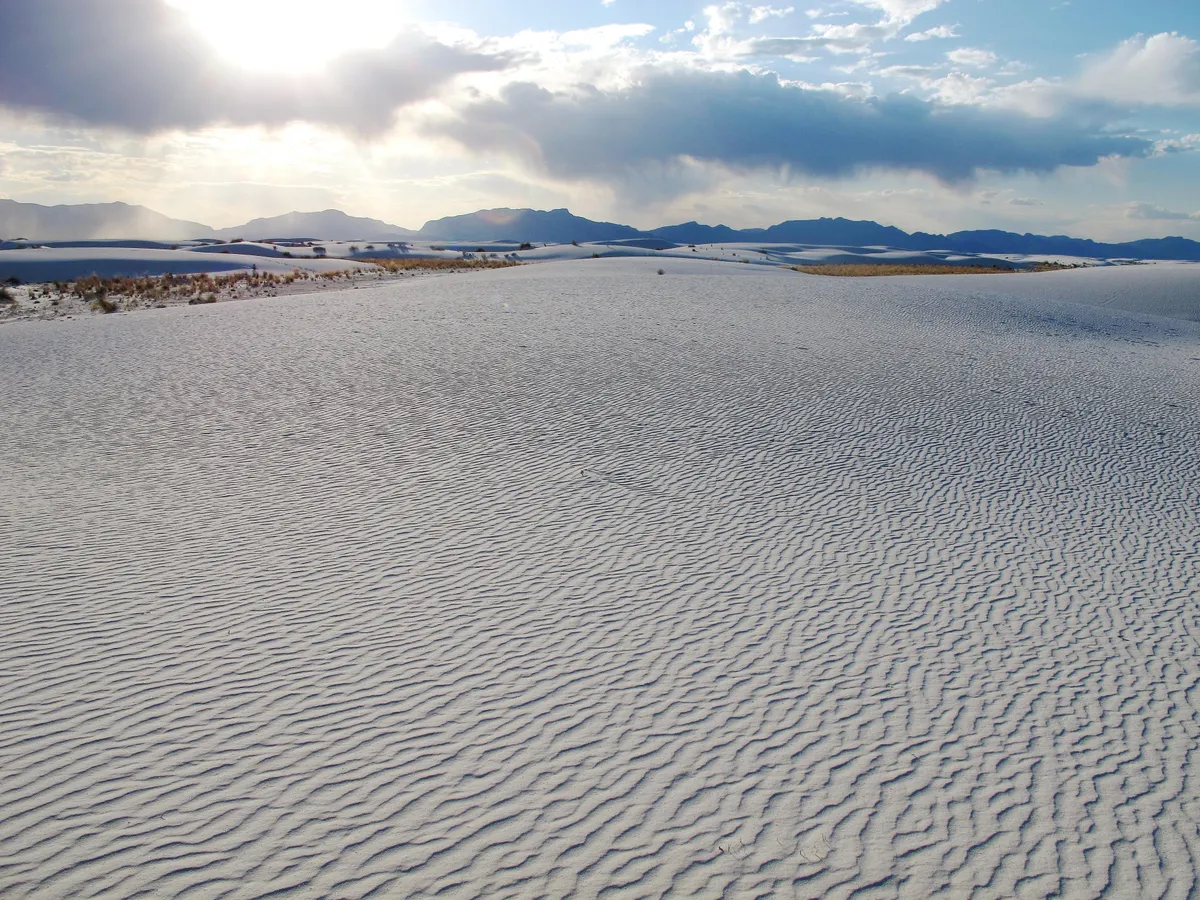
Photo: dconvertini · CC BY-SA 2.0
White Sands National Park
Rising from the heart of the Tularosa Basin is one of the world's great natural wonders - the glistening white sands of New Mexico. Great wave-like dunes of gypsum sand have engulfed 275 square miles of desert, creating the world's largest gypsum dunefield. White Sands National Park preserves a major portion of this unique dunefield, along with the plants and animals that live here.
Entrance Fees
Getting There
Roads and entrances can close temporarily. Check current conditions on nps.gov (opens in a new tab) before you go.
Entrances
- Directions to White Sands Entrance Station (opens in a new tab)
White Sands Entrance StationMain
Alamogordo, NM · Opens 7 am daily; closing time varies by season; closed Thanksgiving and Christmas; may close briefly for missile tests
Airports
- ELP
El Paso International Airport · El Paso, TX
ClosestMajor airport
Distances are approximate road distances; tap a distance for live driving directions.
Activities
Top Hikes
5 mi · 200 ft gain · loop
The park's most challenging hike traversing rolling white gypsum dunes to an ancient lakebed.
Starts at: Dunes Drive
2 mi · 50 ft gain · loop
Loop through the White Sands backcountry with views of the San Andres Mountains.
Starts at: Dunes Drive
1 mi · 30 ft gain · loop
Nature trail with 14 interpretive signs exploring the ecotone where desert scrub meets gypsum dunes.
Starts at: Dunes Drive
0.4 mi · 5 ft gain · out & back
ADA-accessible boardwalk through the fragile interdune area with ten interpretive panels.
Starts at: Dunes Drive
Upcoming Events
Ice Age Life Within Drop-in Program
Stop by any time between 10 and 11 to learn more about the ancient fossilized footprints found at White Sands National Park.
The Sunset Stroll is a leisurely, ranger-guided half mile stroll through the gypsum sand dunes. It is a splendid opportunity to experience the dunes first-hand while learning about the uniqueness of our geology, plants, and animals. As an added bonus, the stroll is timed to end at sunset, providing a panoramic view of the sun setting over the mountains and the potential for some breath-taking photographic opportunities.
Join Resource Program Manager David Bustos at the park's natural outdoor amphitheater for a special ranger presentation about the fossilized footprints found in the park. Learn the tales of ancient humans, how they hunted, how they lived, and the current study of the fossilized footprints found at White Sands.
Best Time to Visit White Sands
Best time to visit: September–November
The best time to visit White Sands National Park is September–November. Fall days are typically sunny with light winds; spring brings windstorms of blowing sand, and summer averages 95°F.
In those months, average highs are 67–88°F at White Sands Visitor Center. Visitor numbers peak in March, so these months are usually less crowded.
Monthly averages at White Sands Visitor Center (4,000 ft). Climate normals (1991–2020): PRISM Group, Oregon State University.
Weather & Climate
Temperatures at White Sands vary greatly throughout the year. Summer time temperatures can be very hot. Winters are mild with cool evenings. Spring time is the windy season. Fall is very enjoyable with mild daytime and night time temperatures.