 National Parks Journal

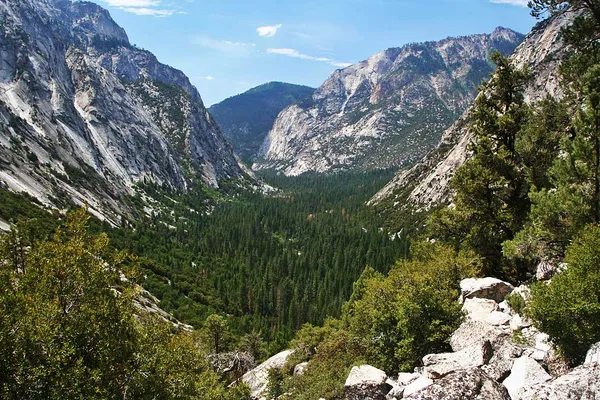
Photo: David Iliff · CC BY-SA 3.0
Yosemite National Park
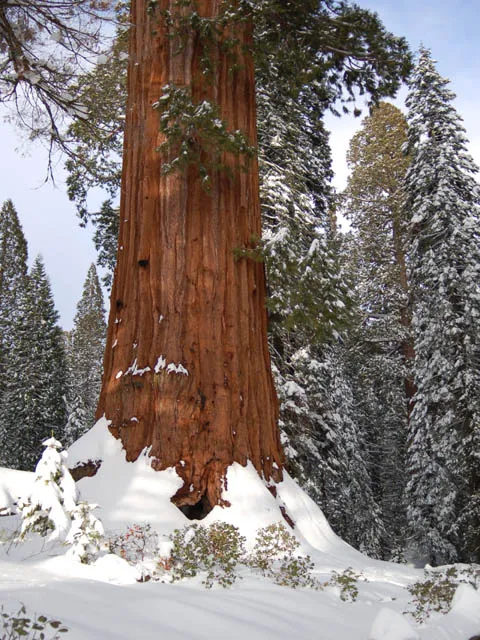
Not just a great valley, but a shrine to human foresight, the strength of granite, the power of glaciers, the persistence of life, and the tranquility of the High Sierra. First protected in 1864, Yosemite National Park is best known for its waterfalls, but within its nearly 1,200 square miles, you can find deep valleys, grand meadows, ancient giant sequoias, a vast wilderness area, and much more.
Entrance Fees
Getting There
Roads and entrances can close temporarily. Check current conditions on nps.gov (opens in a new tab) before you go.
Entrances
- Directions to South Entrance (opens in a new tab)
South EntranceMain
Fish Camp, CA · Open year-round (chains may be required in winter)
- Directions to Arch Rock Entrance (opens in a new tab)
Arch Rock EntranceMain
El Portal, CA · Open year-round
- Directions to Big Oak Flat Entrance (opens in a new tab)
Big Oak Flat EntranceMain
Groveland, CA · Open year-round (chains may be required in winter)
- Directions to Tioga Pass Entrance (opens in a new tab)
Tioga Pass Entrance
Lee Vining, CA · Usually closed November–late May or June (Tioga Road)
- Directions to Hetch Hetchy Entrance (opens in a new tab)
Hetch Hetchy Entrance
Groveland, CA · Open year-round, sunrise to sunset only; may close for snow
Separate area on a dead-end road; no road to Yosemite Valley inside the park
Airports
- FAT
Fresno Yosemite International Airport · Fresno, CA
ClosestMajor airport
Distances are approximate road distances; tap a distance for live driving directions.
Towns to stay in
Inside the park: The Ahwahnee, Yosemite Valley Lodge, Curry Village, and others · NPS lodging info (opens in a new tab)
Activities
Top Hikes
5.4 mi · 1,000 ft gain · out & back
Iconic hike ascending granite steps alongside the Merced River to the top of 317-foot Vernal Fall.
Starts at: Happy Isles
16.4 mi · 4,800 ft gain · out & back
Yosemite's legendary summit hike via the Mist Trail and cables on Half Dome's sheer granite face. Permit required.
Starts at: Happy Isles
7.2 mi · 2,700 ft gain · out & back
Relentless switchbacks to the top of North America's tallest waterfall at 2,425 feet.
Starts at: Camp 4
7.6 mi · 1,000 ft gain · out & back
Tuolumne Meadows' most popular trail to a glacier-carved lake beneath the dramatic Cathedral Peak spire.
Starts at: Tuolumne Meadows
Upcoming Events
Historic Ahwahnee Hotel Tour (Yosemite Valley)
Learn about the history behind Yosemite’s famous luxury hotel on this complimentary one-hour tour.Meet on the hotel’s back lawn. Program hosted by Yosemite Hospitality. This tour is wheelchair-accessible.
Join a staff photographer for a brief field lecture in Yosemite Valley. Space is limited; registration required.
Guided Nature Walk (Yosemite Valley)
Join a naturalist for an easy guided walk of Yosemite’s natural areas. Meet at The Ahwahnee Hotel on the back lawn (use shuttle stop 3.) Program hosted by Yosemite Hospitality.
Best Time to Visit Yosemite
Best time to visit: May–June, September–October
The best time to visit Yosemite National Park is May–June and September–October. Waterfalls peak in May–June; September–October are quieter, with Tioga and Glacier Point roads usually still open.
In those months, average highs are 70–83°F at Yosemite Valley. Visitor numbers peak in August, though June is nearly as busy.
Monthly averages at Yosemite Valley (3,980 ft). Climate normals (1991–2020): PRISM Group, Oregon State University.
Weather & Climate
Yosemite National Park covers nearly 1,200 square miles (3,100 square km) in the Sierra Nevada, with elevations ranging from about 2,000 feet (600 m) to 13,000 ft (4,000 m). Yosemite receives 95% of its precipitation between October and May (and over 75% between November and March). Most of Yosemite is blanketed in snow from about November through May. (Yosemite Valley can be rainy or snowy in any given winter storm.)