 National Parks Journal
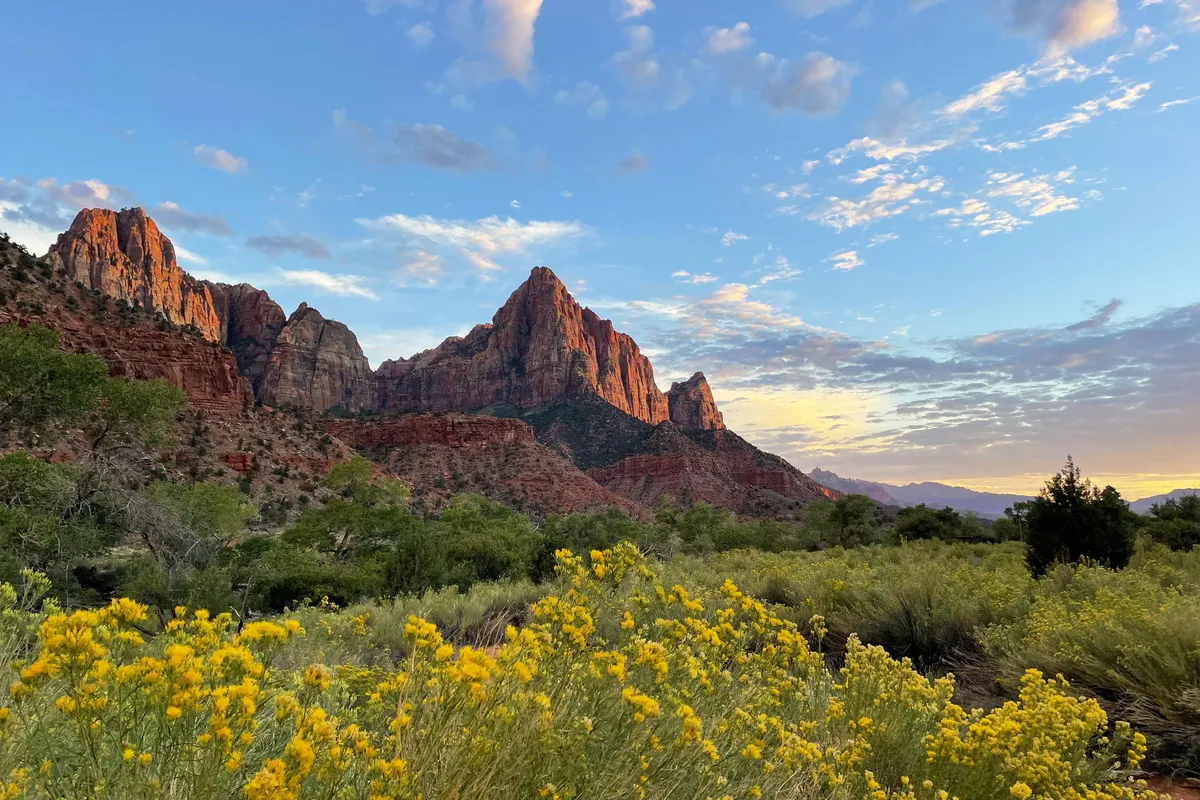
Photo: NPS Photo / Shane Carte · Public domain
Zion National Park
Follow the paths where people have walked for thousands of years. Gaze up at massive sandstone cliffs of cream, pink, and red that soar into a brilliant blue sky. Experience the tall, stretching walls of a narrow slot canyon. Zion’s unique array of plants and animals will enchant you as you absorb the rich history of the past and enjoy the excitement of present-day adventures.
Entrance Fees
Getting There
Roads and entrances can close temporarily. Check current conditions on nps.gov (opens in a new tab) before you go.
Entrances
- Directions to South Entrance (opens in a new tab)
South EntranceMain
Springdale, UT · Open year-round, 24 hours
- Directions to East Entrance (opens in a new tab)
East Entrance
Mount Carmel Junction, UT · Open year-round, 24 hours; oversize vehicles need a tunnel escort or cannot pass
- Directions to Kolob Canyons Visitor Center (opens in a new tab)
Kolob Canyons Visitor Center
Cedar City, UT · Open year-round; Kolob Canyons Road can close briefly for snow
Separate section; no road to Zion Canyon
Airports
- SGU
St. George Regional Airport · St. George, UT
ClosestMid-size airport - LAS
Harry Reid International Airport · Las Vegas, NV
Major airport
Distances are approximate road distances; tap a distance for live driving directions.
Towns to stay in
Cedar City, UTFor Kolob Canyons
Inside the park: Zion Lodge · NPS lodging info (opens in a new tab)
Activities
Top Hikes
4.4 mi · 1,488 ft gain · out & back
Zion's most famous hike ascending Walter's Wiggles and a narrow ridge with chains and 1,000-foot drop-offs. Permit required.
Starts at: The Grotto
10 mi · 200 ft gain · out & back
Iconic river hike wading through the Virgin River in a slot canyon with 1,000-foot walls only 20-30 feet wide.
Starts at: Temple of Sinawava
1 mi · 154 ft gain · out & back
Short trail with sandstone steps and handrails to views of the Towers of the Virgin and Zion Canyon.
Starts at: East side of Zion-Mt. Carmel Tunnel
6.8 mi · 300 ft gain · out & back
Through ponderosa and pinyon-juniper forest to Zion's highest viewpoint at 6,508 feet with commanding canyon views.
Starts at: East Mesa Trailhead
Upcoming Events
Swing by the Zion Canyon Visitor Center Plaza for a short ranger talk to enrich your park experience! Talks take place next to the shuttle stop, making it easy to attend before or after riding the Zion Canyon Shuttle. Topics may include geology, wildlife, plants, human history, and so much more. No two programs are the same! Accessibility information: This program takes place outdoors on a partially-shaded patio. Stone benches are available for seating, as well as space for mobility devices. Rangers at the visitor center are available for any additional questions. You can also visit our Accessibility page for more information.
Best Time to Visit Zion
Best time to visit: April–May, October–November
The best time to visit Zion National Park is April–May and October–November. Hiking weather is mild, avoiding 100°F summer heat and July–September monsoon flash floods.
In those months, average highs are 62–83°F at Zion Canyon Visitor Center. Visitor numbers peak in June, though May is nearly as busy.
Monthly averages at Zion Canyon Visitor Center (3,930 ft). Climate normals (1991–2020): PRISM Group, Oregon State University.
Weather & Climate
Zion is known for a wide range of weather conditions. Temperatures vary with changes in elevation and day/night temperatures may differ by over 30°F (16°C). In summer, temperatures in Zion National Park often exceed 100°F (38°C). Zion experiences monsoons from mid-July into September that result in an increased risk of flash floods. Always be aware of the threat of storms and lightning and be prepared for a wide range of weather conditions. Winters are generally mild.